Struggling to Keep Up with Your Research? Anara AI Can Help
For scientists, students, and research teams, managing vast amounts of information, extracting key insights, and ensuring every claim is accurately cited can be a daunting, time-consuming task. The pressure to maintain academic rigor while processing complex documents often leads to burnout and missed deadlines.
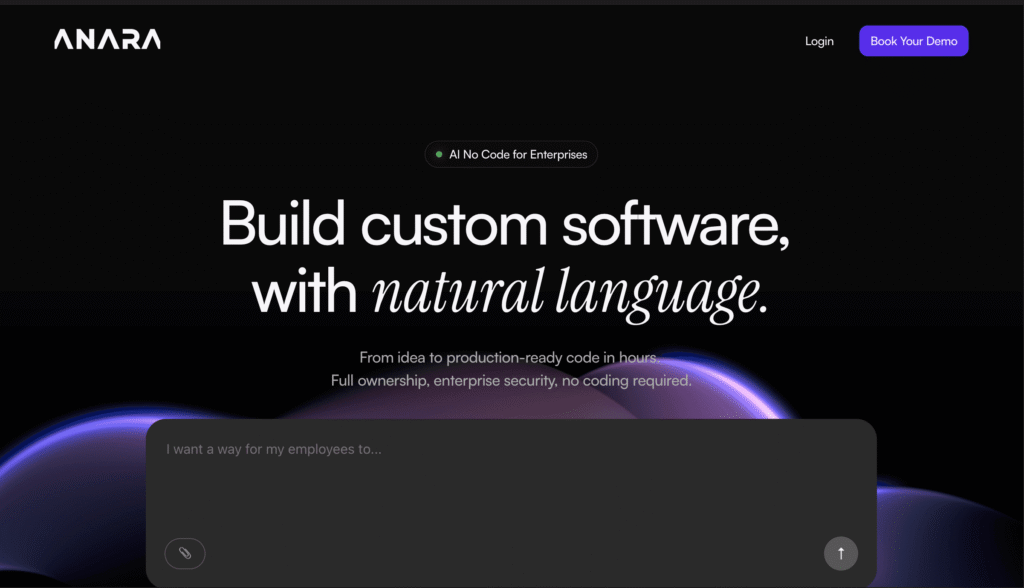
This is where Anara AI, formerly known as Unriddle AI, steps in. It’s an AI-powered research assistant designed to streamline your academic and professional workflows by providing high accuracy and verifiable information.
In this comprehensive review, we’ll explore Anara’s core functionalities, break down its pricing, weigh its pros and cons, compare it to key alternatives, and help you decide if it’s the right tool to enhance your research productivity and integrity.
What is Anara AI?
Anara AI is an advanced AI workspace built specifically to automate and enhance various stages of the research process. It allows users to upload and interact with diverse file types – including PDFs, audio, video, and images – leveraging artificial intelligence to generate summaries, answer specific questions, and produce automatic, verifiable citations.
The tool’s primary focus is to help users build organized research libraries, cross-reference and verify sources, and facilitate collaboration on projects. It positions itself as an invaluable asset for conducting thorough literature reviews, performing in-depth document analysis, and preparing for studies or presentations. Anara was developed with a strong emphasis on mitigating AI hallucinations, ensuring that every piece of information provided can be traced back to its original source, a critical feature for academic and professional integrity.
Key Features: Detailed Breakdown
Anara AI offers a robust suite of features designed to support researchers at every stage. Here’s a closer look at its most impactful functionalities:
Multi-Format Document Analysis
Anara isn’t just for PDFs. It supports a wide array of file types for upload and analysis, making it incredibly versatile. You can feed it PDFs, Word documents, PowerPoint slides, EPUB files, images (with OCR for text recognition), audio files (which it transcribes), video files, YouTube URLs, and even web pages. This broad compatibility means you can centralize virtually all your research materials, regardless of their original format, into one intelligent workspace.
Cite-Aware AI Chat
One of Anara’s most powerful and distinguishing features is its “Cite-Aware AI Chat.” You can chat directly with Anara’s AI, asking questions about your uploaded documents or broader academic databases. Crucially, every AI-generated response comes with fully clickable, source-linked references. This allows you to verify information with a single click, instantly tracing claims back to specific passages in your original documents. This feature directly addresses the common concern of AI hallucinations, building immense trust and ensuring academic rigor.
Cross-Document Querying & Analysis
For researchers working with multiple sources, Anara excels. It enables you to group related documents into folders and then ask questions that span across the entire collection. The AI can compare findings across different papers, detect contradictions between sources, extract common themes from a body of literature, and even identify potential research gaps that emerge from a multi-document analysis. This capability is invaluable for comprehensive literature reviews and synthesizing complex information.
Flashcard and Quiz Generation
Beyond analysis, Anara also supports learning and knowledge retention. From your uploaded lecture slides, textbooks, or even transcribed videos, the tool can automatically generate flashcards and multiple-choice questions. This feature is particularly useful for students preparing for exams or researchers looking to quickly test their understanding of new material.
Searchable Research Library
Anara provides a single, organized, and fully searchable library for all your projects. Whether you’re working solo or collaborating with a team, this feature ensures that all your uploaded documents and generated insights are stored in one accessible place. Efficient organization and retrieval of scholarly work become effortless, saving significant time otherwise spent sifting through files.
AI Model Flexibility
Unlike many competitors that lock you into a single AI model, Anara offers choice. Depending on your subscription tier, you can select between various premium AI models from different providers, including GPT (OpenAI), Claude (Anthropic), and Gemini (Google). There’s also an “Auto” mode that intelligently selects the optimal model for a given task, offering greater control and potentially better results for specialized queries.
Collaboration Tools
For teams working on joint research, Anara includes essential collaboration features. These encompass shared workspaces, where multiple users can access and interact with the same documents and projects, collaborative editing capabilities, and fine-grained permission controls. This facilitates real-time teamwork and streamlines the management of complex, multi-author research projects.
Automatic Citation Finder
Writing a paper often involves finding the right citations. Anara can assist here by searching for relevant papers and books based on your writing and automatically suggesting or finding citations. This feature integrates seamlessly with reference managers like Zotero and Mendeley in higher tiers, further streamlining the academic writing process.
Pricing & Plans
Anara offers a range of pricing tiers to suit different user needs, from casual exploration to intensive team research. Note that annual billing typically offers a discount compared to monthly rates.
Free Plan ($0/month)
- Price: Free
- Key features included: 1,000 AI words per day, 5 uploads per day, a 20 MB or 120-page limit per file, and access to the GPT OSS model.
- Best for whom: Individuals looking to evaluate Anara’s core functionality, casual users with minimal research needs, or students with small, infrequent assignments.
Plus Plan ($10/month, annual billing)
- Price: $10/month (when billed annually)
- Key features included: 4,000 AI words per day, 10 uploads per day, a 100 MB file limit, access to Gemini 2.5 Flash, and support for up to 5 collaborators per folder.
- Best for whom: Individual students or researchers with moderate daily research needs who require more capacity than the Free Plan and basic collaboration.
Pro Plan ($20/month, annual billing)
- Price: $20/month (when billed annually)
- Key features included: Unlimited AI words and uploads, a 300 MB or 10,000-page limit per file, access to premium models like GPT 5.1, Claude 4 Sonnet, and Gemini 2.5 Pro, and Zotero/Mendeley connectors.
- Best for whom: This is considered the “best value” for most dedicated researchers, graduate students, and PhD candidates who need extensive analysis capabilities and integration with reference managers.
Max Plan (~$30/month, annual billing)
- Price: Approximately $30/month (when billed annually)
- Key features included: Everything in the Pro Plan, plus access to advanced models like Claude Opus 4.5 and Gemini 3 Pro, as well as specialized agents like @DeepSearch and @CompleteForm, with a 500 MB or unlimited pages file limit.
- Best for whom: Power users, advanced researchers, and professionals who require the most sophisticated AI models and agentic features for deep, iterative research tasks.
Team Plan ($30/seat/month)
- Price: $30/seat/month
- Key features included: All Max Plan features, plus enhanced team collaboration tools, shared workspaces, collaborative editing, robust admin controls, and a dedicated account manager.
- Best for whom: University departments, corporate R&D teams, pharmaceutical research groups, or any organization requiring comprehensive multi-user project management and advanced AI capabilities.
Anara’s pricing structure scales with usage and required AI sophistication. The free plan is a good starting point, but serious academic or professional users will likely find the Plus or Pro plans necessary to unlock the tool’s full potential.
Pros and Cons
Anara AI brings significant advantages to the research workflow, but like any tool, it has its limitations.
Pros ✅
- ✅ Citation Traceability: Anara’s strongest asset is its ability to link every AI-generated answer directly to specific passages in the uploaded source documents. This drastically reduces AI hallucinations and enhances the trustworthiness of the information.
- ✅ Multi-Format Support: It handles an impressive array of document types, including PDFs, audio, video, and images, all within a single workspace. This versatility is superior to many text-only competitors.
- ✅ Cross-Document Analysis: The tool excels at synthesizing information across multiple documents, making it invaluable for identifying themes, contradictions, and research gaps during comprehensive literature reviews.
- ✅ AI Model Flexibility: Users can choose from various cutting-edge AI models (GPT, Claude, Gemini) based on their specific needs and subscription tier, offering more control over output quality.
- ✅ Significant Time-Saving: Users consistently report substantial time savings in literature reviews, document analysis, and study preparation, often reducing hours of work to minutes.
- ✅ User-Friendly Interface: The platform is generally praised for its intuitive design, making it accessible even for those who are not particularly tech-savvy.
- ✅ Strong Data Security: Anara emphasizes that user data is not used to train its AI models and operates under strict zero data retention agreements with AI providers, ensuring privacy.
Cons ❌
- ❌ Limited End-to-End Research Support: Anara primarily focuses on document analysis and synthesis. It doesn’t offer built-in tools for literature discovery (e.g., finding new papers beyond uploaded ones), comprehensive academic writing, editing, or submission checks.
- ❌ Struggles with Theoretical Content: While excellent for empirical and data-driven research, Anara may oversimplify philosophical or deeply interpretive arguments, which require nuanced human understanding.
- ❌ Poor Mobile Experience: The platform is currently not well-optimized for mobile devices, which can be frustrating for users who frequently access or read research on the go.
- ❌ Limited Free Tier: While a free plan exists, its daily limits on AI words, uploads, and file size are often insufficient for serious academic or professional work, pushing users towards paid plans for real value.
- ❌ No Robust Version Control: For multi-author projects, the absence of sophisticated version tracking and project management features could be a limitation compared to dedicated project management software.
Real-World Use Cases
Anara AI proves its worth in several practical scenarios, enhancing productivity and accuracy for specific user groups.
If you’re a Graduate Student or PhD Candidate…
You can upload dozens of research papers, your dissertation chapters, and lecture notes into Anara. Ask it to summarize key arguments across your literature review, identify common methodologies, or even generate flashcards from dense textbook chapters. Anara ensures that every summary or answer is linked directly to the source, making your citation process robust and efficient for your thesis or publications.
If you’re a Scientific Researcher or Lab Member…
Imagine needing to quickly grasp the findings from 50+ scientific articles for a new project proposal. Upload all the PDFs to Anara, and then query the collection to compare experimental results, identify gaps in existing research, or extract specific data points, all with verifiable citations. This significantly cuts down the time spent on initial literature screening and synthesis, allowing you to focus on experimental design.
If you’re a Professional Analyst in Pharma or R&D…
You might be tasked with analyzing market reports, clinical trial data, and competitor analyses. Anara allows you to upload these diverse documents, including internal reports and external web pages, and then ask complex questions across the entire dataset. For instance, “What are the reported side effects of Drug X across all trials, and how do they compare to Drug Y?” Anara provides concise, source-backed answers, speeding up your strategic decision-making.
If you’re a Collaborative Research Team…
Working on a joint publication or a grant application, your team can use Anara’s shared workspaces. Upload all relevant documents, conduct cross-document analyses, and collaboratively extract insights. The tool ensures everyone is referencing the same verified information, streamlining content creation and reducing discrepancies, especially when integrating with tools like Zotero for shared bibliographies.
How It Compares to Alternatives
The AI research assistant market is growing, with several strong contenders. Here’s how Anara stacks up against some of its top competitors:
Anara vs. Paperguide
- Anara: Excels in multi-format document analysis (PDF, audio, video, images), highly flexible AI model choice, and its unwavering focus on citation traceability within *your uploaded documents*.
- Paperguide: Often cited for its broader academic search capabilities across millions of papers, a structured “Literature Review Agent,” custom-column data extraction, a citation-grounded AI Writer, and a native reference manager. Paperguide offers more end-to-end literature discovery and structured data extraction.
Anara vs. SciSpace (formerly Typeset)
- Anara: Stronger in handling diverse input formats (audio, video, images) and offering AI model flexibility. Its cross-document querying is a significant advantage for synthesizing information from multiple uploads.
- SciSpace: Built around AI-powered Chat with PDF, literature reading, and customized research agents, with a database of over 280 million entries. SciSpace’s strength lies in its vast internal database for literature discovery and its AI-powered features for understanding and summarizing papers from that database.
Anara vs. Elicit
- Anara: Focuses on deep analysis and synthesis of *your specific uploaded documents* with verifiable citations. Its multi-format support is a key differentiator.
- Elicit: Primarily an AI research tool focused on streamlining literature reviews, semantic searches, and structured data extraction across a large index of academic papers. Elicit is excellent for identifying relevant papers and extracting specific information from them, making it strong for initial literature screening and systematic reviews.
Anara vs. NotebookLM
- Anara: Offers multi-model flexibility, more advanced collaboration features, and specialized agents in higher tiers. Its core strength remains citation traceability within diverse uploaded files.
- NotebookLM: A Google product that shares many core features with Anara for learning new topics and literature reviews. It offers a generous free tier and focuses on Google’s Gemini models. NotebookLM is strong for personal knowledge management and summarizing documents.
Anara vs. General-Purpose AI (ChatGPT/Claude)
- Anara: Specifically designed for academic rigor, providing direct source links for every AI-generated answer. It processes diverse file types and facilitates cross-document analysis within a secure environment.
- ChatGPT/Claude: While powerful for generating text and answering general questions, they lack Anara’s specialized focus on citation traceability, document grounding, and multi-format input. They are prone to “hallucinations” and often cannot directly reference specific passages in uploaded, complex documents, making them less suitable for verifiable academic work.
In summary, Anara differentiates itself through its unwavering commitment to citation traceability, extensive multi-format input support, and AI model flexibility, making it a strong choice for researchers who prioritize verifiable, document-grounded insights from their own materials.
Who Should (and Shouldn’t) Use This Tool?
Understanding Anara’s ideal user base helps determine if it’s the right fit for your specific research needs.
Best for:
- Scientists and Academic Researchers: Especially those conducting literature reviews, systematic reviews, or analyzing large volumes of scientific papers and reports where citation accuracy is paramount.
- Graduate Students and PhD Candidates: Who need to understand dense scientific material, organize findings, write well-cited documents for dissertations or publications, and efficiently prepare for exams.
- Research Teams: In universities, pharmaceutical companies, or corporate R&D settings that require collaborative tools for managing complex, multi-source projects with high data integrity.
- Students Preparing for Exams: Who want to convert lectures, textbooks, or videos into flashcards and practice quizzes for effective study.
- Anyone Needing Verifiable AI Assistance: Particularly those who cannot afford uncited or hallucinated answers and value academic rigor and the ability to trace information back to its source.
- Users with Diverse Research Materials: Individuals who work with not just PDFs, but also audio, video, images, and web content and want to centralize their analysis.
Not ideal for:
- Users Primarily Seeking Literature Discovery: If your main need is to find new academic papers beyond your existing library, tools like SciSpace or Elicit might be more efficient.
- Those Working Exclusively with Highly Theoretical or Philosophical Content: Anara’s strength lies in empirical data; it may oversimplify nuanced interpretive arguments.
- Users Who Rely Heavily on Mobile Devices for Research: The current poor mobile experience could be a significant drawback.
- Individuals on a Very Tight Budget: While there’s a free tier, serious academic work will quickly exceed its limits, requiring an upgrade.
- Users Requiring Robust Project Management and Version Control: For complex, multi-author projects needing advanced version tracking, dedicated project management software might be a better choice.
Final Verdict
Anara AI (formerly Unriddle AI) stands out as a highly specialized and effective AI research assistant, particularly for those in academic and professional research fields. Its core strength – the unwavering commitment to citation traceability and linking every AI-generated insight directly to its source – addresses a critical pain point in using AI for research: trust and accuracy. This feature alone makes it a compelling choice for anyone whose work depends on verifiable information.
The ability to process a wide range of document types, from PDFs to audio and video, combined with flexible AI model selection and powerful cross-document analysis, positions Anara as a robust tool for deep literature reviews and complex data synthesis. While it has limitations, such as its mobile experience and focus primarily on analysis rather than discovery, its benefits in efficiency and academic integrity are substantial.
For researchers, students, and teams who are constantly sifting through dense materials and need to ensure their findings are backed by solid evidence, Anara AI is a powerful asset that can significantly streamline workflows and enhance the quality of their work.
Overall Rating: 8.9/10 – Anara AI earns a high score for its unparalleled citation traceability, multi-format input, and robust analysis capabilities, making it a trustworthy and highly efficient tool for serious research, despite a few areas for improvement.
Try Anara AI for Your Research →
FAQ
What is Anara AI, and who is it for?
Anara AI is an AI-powered research assistant designed for scientists, students, and research teams. It helps users analyze complex documents, organize research, extract key information, and generate automatic, verifiable citations. It’s ideal for anyone needing high accuracy and source traceability in their academic or professional work.
How does Anara AI ensure accuracy and prevent hallucinations?
Anara’s primary mechanism for ensuring accuracy is its “Cite-Aware AI Chat” feature. Every AI-generated response includes fully clickable, source-linked references that trace claims directly back to specific passages in your uploaded documents. This allows users to easily verify information and significantly mitigates AI hallucinations.
What types of files can I upload to Anara AI?
Anara supports a wide range of file types, including PDFs, Word documents, PowerPoint slides, EPUB files, images (with OCR), audio files (with transcription), video files, YouTube URLs, and web pages, making it highly versatile for diverse research materials.
Is there a free version of Anara AI?
Yes, Anara offers a Free Plan. It includes 1,000 AI words per day, 5 uploads per day, and a 20 MB or 120-page limit per file. While useful for evaluation or casual use, serious researchers will likely find the paid plans more suitable for extensive work.
How does Anara AI compare to general AI chatbots like ChatGPT?
Anara AI is specialized for academic research, focusing on document-grounded responses with verifiable citations. Unlike general AI chatbots, it can process diverse file types, conduct cross-document analysis within your uploaded library, and link every insight directly to its source, which is crucial for academic integrity and avoiding unverified claims.
Does Anara AI offer collaboration features for teams?
Yes, Anara provides collaboration tools, particularly in its higher-tier plans (Plus, Pro, Max, and Team). These include shared workspaces, collaborative editing, and permission controls, facilitating real-time teamwork on research projects for multiple users.